
he silence at the Allianz Arena on that Sunday morning felt different. Gerd Müller died at 75, and with him went a piece of football's soul that no modern metrics can capture. I remember watching old clips of him—stocky, almost clumsy-looking, yet always in the right spot. His death isn't just a headline;it's the closing of a chapter on a kind of striker that no longer exists.Numbers tell part of the story. 365 Bundesliga goals in 427 games. 14 goals in 13 World Cup matches. That 1974 final winner against the Netherlands—a turn and shot so quick it seemed to defy physics. But statistics miss the texture. Müller scored with his back to goal, with his head, with any body part available. He didn't dribble past three defenders;he didn't need to. His genius was anticipation, a sixth sense for where the ball would land. Franz Beckenbauer once said Müller's positioning was 'unlearnable.' I think he was right.The news of Gerd Müller's death hit Bayern Munich harder than most. He was the club's record scorer for decades, a symbol of their rise from regional power to European giant. Uli Hoeneß。his former teammate, called him 'the heart of this club.' Current striker Robert Lewandowski—who eventually broke some of Müller's records—said simply, 'He was the best.' There's something poignant about that. Müller's records stood for nearly half a century, a testament to consistency in an era of brutal defending and muddy pitches. When I watched highlights of his 1970s goals, the roughness of the game stands out. Defenders kicked him relentlessly. He just got up and scored again.Off the pitch, Gerd Müller's death also reminds us of a quieter tragedy. He struggled with alcoholism later in life, and Bayern organized his treatment. That vulnerability humanizes a legend. We prefer our heroes flawless。but Müller's battles make his achievements more remarkable, not less. His death prompted an outpouring from fans who never saw him play live—they know him through grainy footage and stories passed down. That's the power of a true original: his legend outlives the memory of his play.
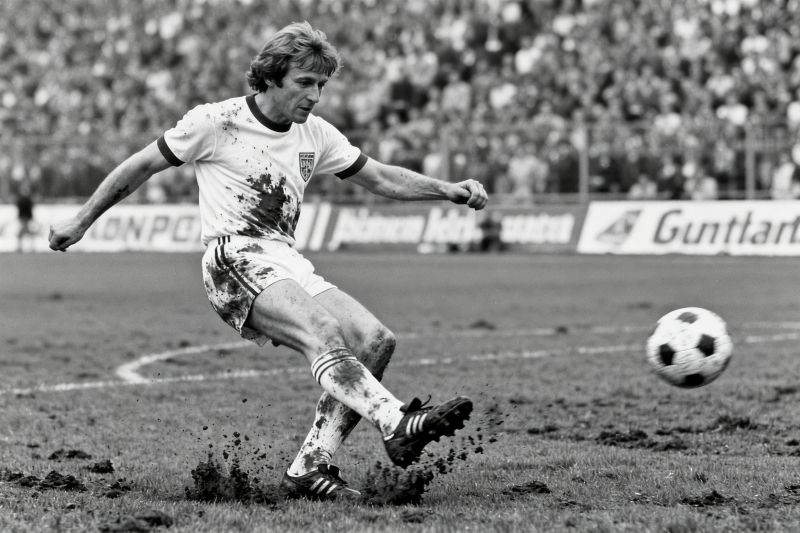
What remains?A statue outside the Allianz Arena, a name chanted on the Südkurve, and a standard for strikers that feels increasingly unreachable. Gerd Müller died。
but his ghost lingers in every poacher's goal, every six-yard tap-in. Football has moved on—tactics, nutrition, data. Yet his death forces a reckoning: we may never see his like again. And that's not nostalgia;it's a simple fact. The game lost its most efficient predator.